
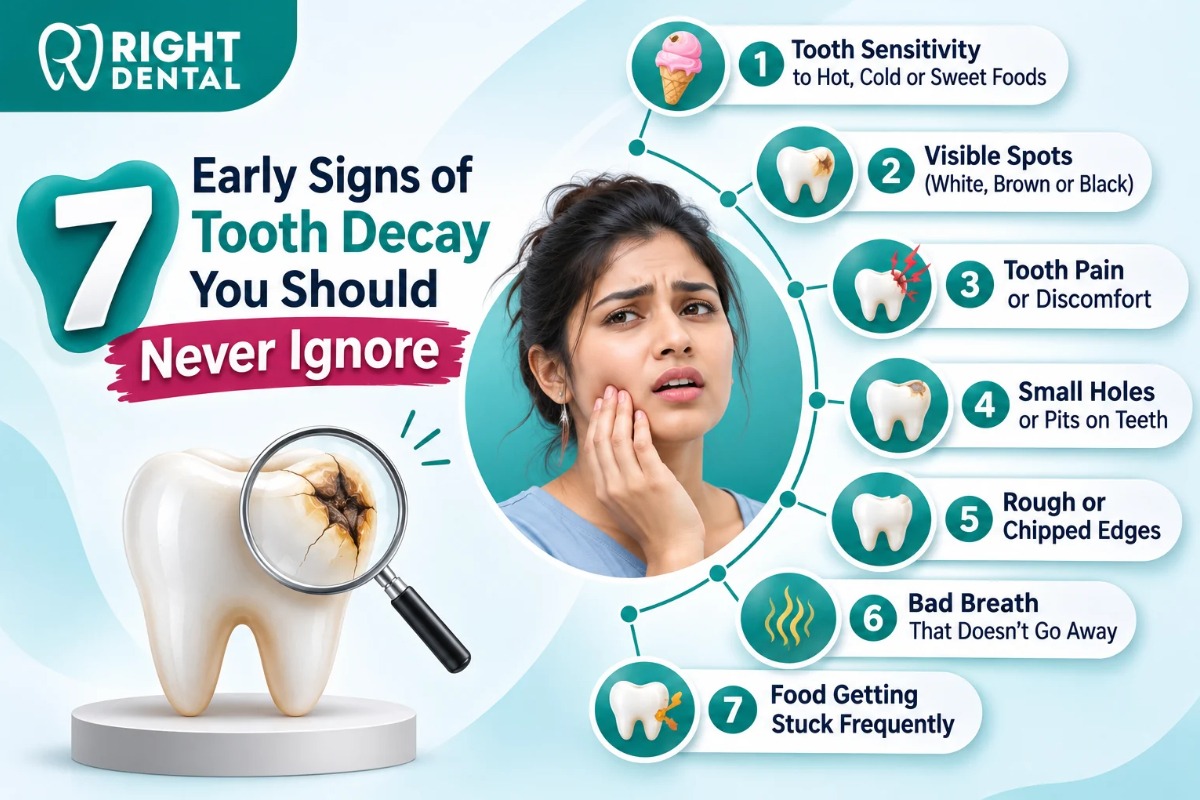
Tooth decay is one of the most common dental problems affecting people of different age groups. It can develop gradually when bacteria in the mouth produce acids that damage the tooth enamel. In the early stages, tooth decay may not cause noticeable pain, which is why many people overlook the warning signs.
However, ignoring these early symptoms can allow the decay to progress deeper into the tooth, potentially leading to cavities, infections and the need for more complex dental treatments.
Recognising the early signs of tooth decay can help you seek professional dental care at the right time and protect your natural teeth.
So, what are the warning signs you should look out for? Let’s explore seven common signs of tooth decay that should never be ignored.
What Is Tooth Decay and Why Does It Happen?
Tooth decay occurs when bacteria in dental plaque break down sugars from food and drinks, producing acids that gradually weaken the tooth enamel. Over time, repeated acid attacks can cause mineral loss and eventually create cavities.
7 Early Signs of Tooth Decay You Should Never Ignore
Tooth decay does not always begin with severe pain. Sometimes, small changes in your teeth can indicate that something is wrong.
Here are seven signs to watch for.
1. White Spots on Your Teeth
One of the earliest visible signs of tooth decay is the appearance of chalky white spots on the tooth surface. These spots may indicate enamel demineralisation, which happens when minerals are lost due to repeated acid attacks.
At this stage, the damage may sometimes be managed or reversed through professional fluoride treatment and improved oral hygiene, depending on the extent of enamel damage.
Do not ignore unusual white patches, especially if they appear near the gumline or around orthodontic brackets.
2. Tooth Sensitivity to Hot and Cold Foods
Do you experience a sudden uncomfortable feeling when drinking cold water or eating hot food?
Tooth sensitivity can sometimes be an early indication of enamel damage or tooth decay. As the protective enamel becomes weakened, the underlying tooth structure may become more sensitive to temperature changes.
However, sensitivity can also occur due to gum recession, enamel erosion or other dental conditions.
If the discomfort happens frequently, consult a dentist to identify the actual cause.
3. Brown or Black Spots on Your Teeth
Small brown or black spots on your teeth may indicate tooth decay, although not every dark spot is a cavity. Some stains develop due to food, beverages or other causes.
When decay progresses, affected areas may develop visible discolouration or small holes in the tooth surface.
A dental examination can help determine whether the marks are surface stains or signs of cavities that require treatment.
4. Pain While Biting or Chewing Food
If you experience discomfort when biting or chewing food, it may indicate an underlying dental problem.
Tooth decay can gradually affect the inner layers of a tooth, making it uncomfortable to apply pressure while eating.
Other conditions, including cracked teeth and damaged dental fillings, can also cause similar symptoms.
Avoid ignoring repeated chewing discomfort, as early diagnosis can help prevent further damage.
5. Persistent Bad Breath
Bad breath, also known as halitosis, can sometimes be associated with tooth decay.
When cavities develop, food particles and bacteria may accumulate in damaged areas of the teeth. This can contribute to unpleasant smells and an unpleasant taste in the mouth.
However, bad breath can also result from gum disease, tongue coating, dry mouth and other health conditions.
If bad breath continues despite regular brushing and mouth cleaning, consider scheduling a dental examination.
6. Small Holes or Pits on the Tooth Surface
As tooth decay progresses, the damaged enamel may develop small holes or visible pits.
These cavities can trap food particles, making the affected tooth difficult to clean properly. You may notice the problem while brushing or when running your tongue over the tooth surface.
Once a cavity has formed, it generally requires professional dental treatment. Do not attempt to clean or repair it yourself.
7. Toothache or Continuous Dental Discomfort
Toothache is often a sign that tooth decay has progressed beyond its earliest stages.
When decay reaches deeper layers of the tooth, it can irritate the dental pulp, which contains nerves and blood vessels. This may result in persistent pain, throbbing or discomfort.
Depending on the severity, treatment may involve a dental filling, root canal treatment or another suitable procedure.
If you experience continuous tooth pain, seek dental attention rather than relying only on temporary pain relief.
How Is Tooth Decay Treated?
The appropriate treatment depends on how much of the tooth has been affected.
- Early enamel demineralisation: Fluoride treatments and improved oral hygiene may help strengthen the enamel.
- Dental cavities: A dental filling may be recommended to restore the damaged portion of the tooth.
- Advanced tooth decay: Root canal treatment may be required if the decay reaches the dental pulp.
- Severely damaged teeth: A dental crown or, in some cases, tooth extraction may be necessary depending on the remaining tooth structure.
A dentist will examine the affected tooth and recommend the most suitable treatment based on its condition.
Conclusion
Tooth decay may begin with small changes that are easy to overlook, but ignoring these signs can lead to more serious dental problems. From white spots and tooth sensitivity to visible cavities and persistent pain, recognising the warning signs is an important part of maintaining good oral health.
Remember, you do not have to wait until a tooth starts hurting to visit a dentist. Regular dental check-ups, proper brushing, daily flossing and healthy eating habits can help protect your natural teeth.