Getting braces is an important step towards achieving straighter teeth and a healthier smile. However, wearing braces also means giving extra attention to your daily oral hygiene routine. Food particles can easily get trapped around brackets and wires, making it difficult to clean your teeth properly.
Without proper care, plaque can build up around the braces and increase the risk of cavities, gum problems and white spots on the teeth. This is why maintaining good oral hygiene throughout your orthodontic treatment is essential.
Whether you have recently started wearing braces or have been using them for several months, following the right dental care practices can help protect your teeth during treatment.
Let’s look at how to take care of your teeth while wearing braces.
Why Is Oral Hygiene Important When Wearing Braces?
Braces consist of brackets, wires and other components that gradually move your teeth into the desired position. Although they help improve your smile, these components create additional spaces where food particles and plaque can collect.
7 Effective Tips to Take Care of Your Teeth While Wearing Braces
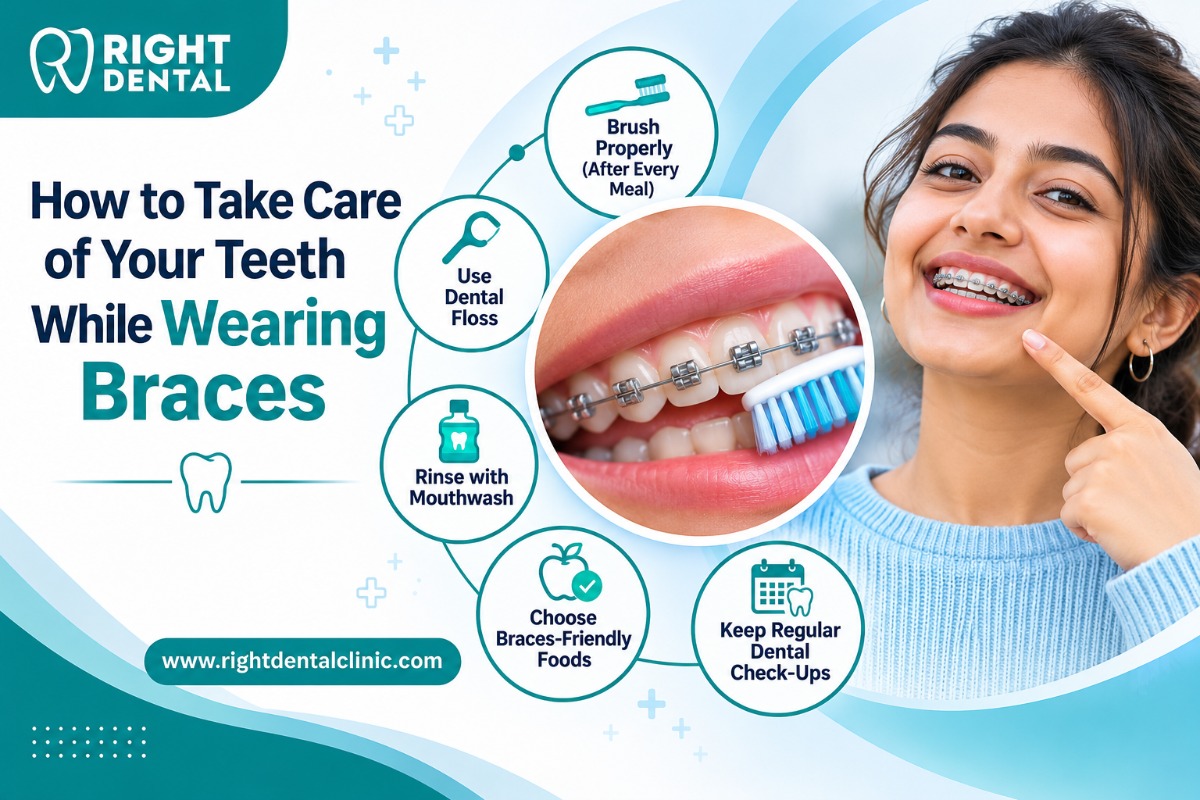
1. Brush Your Teeth After Every Meal
Brushing is one of the most important habits when wearing braces. Food particles can get stuck between brackets and wires after eating, so cleaning your teeth properly is essential.
Use a soft-bristled toothbrush or an orthodontic toothbrush to clean around the brackets and along the gumline. Brush gently at different angles to reach areas around the braces.
Ideally, brush after every meal. If brushing is not possible immediately, rinse your mouth with water and brush when you can.
2. Use an Interdental Brush to Clean Between Braces
A regular toothbrush may not reach every small space around orthodontic brackets and wires. An interdental brush can help clean these difficult-to-reach areas.
Gently move the small brush around and underneath the orthodontic wire and between brackets to remove trapped food particles.
Avoid forcing the brush into tight spaces, as this may damage your gums or braces.
3. Floss Every Day
Flossing is equally important when you wear braces because food particles and plaque can collect between your teeth.
Using a floss threader or orthodontic floss can make cleaning around braces easier. Carefully guide the floss between your teeth and clean along the sides without pulling or putting excessive pressure on the wires.
Daily flossing helps maintain healthy gums and reduces the risk of cavities between teeth.
4. Choose Foods That Are Safe for Your Braces
Your food choices can directly affect your braces and overall dental health. Certain hard, sticky and chewy foods may damage brackets or bend orthodontic wires.
Try to include softer foods, especially during the initial days after getting braces or following an adjustment.
Foods to include:
- Soft-cooked vegetables.
- Rice and well-cooked grains.
- Bananas and other soft fruits.
- Eggs and soft proteins.
- Yogurt and other soft dairy products.
Foods to avoid or be careful with:
- Hard nuts and popcorn.
- Sticky candies and chewing gum.
- Hard sweets and ice.
- Chewy caramel and toffees.
- Biting directly into whole apples or hard vegetables.
Cutting fruits and vegetables into smaller pieces can make eating easier and safer.
5. Use Fluoride Toothpaste
Fluoride helps strengthen tooth enamel and protect against tooth decay. When wearing braces, maintaining strong enamel is particularly important because plaque can collect around the brackets.
Brush twice daily using fluoride toothpaste and follow your dentist’s recommendations regarding additional fluoride products if necessary.
Avoid swallowing toothpaste, especially if you are using a prescription fluoride product.
6. Keep Your Braces Clean and Check for Damage
Apart from cleaning your teeth, regularly check your braces for any unusual changes.
Look for loose brackets, bent wires or broken components. If a wire starts irritating your cheeks or gums, contact your orthodontist for advice.
Do not try to repair or adjust your braces yourself. Getting professional assistance can help prevent further discomfort or damage.
7. Attend Your Regular Orthodontic Appointments
Regular orthodontic appointments are important for monitoring your treatment progress. During these visits, your orthodontist checks tooth movement, adjusts the braces when necessary and identifies any potential problems.
Missing appointments may delay your treatment or affect the progress of your teeth alignment.
Follow your orthodontist’s recommended appointment schedule and discuss any discomfort or concerns during your visits.
What Should You Do If You Experience Pain or Discomfort After Getting Braces?
It is normal to experience mild soreness or pressure when braces are first fitted or adjusted. This usually improves within a few days as your mouth gets used to the changes.
You can manage mild discomfort by:
- Eating soft foods for a few days.
- Rinsing your mouth with warm salt water.
- Using orthodontic wax to cover brackets that irritate your cheeks or lips.
- Following your dentist’s advice about suitable pain relief.
However, if you experience severe pain, significant swelling, persistent irritation or a broken wire, contact your orthodontist for professional guidance.
Conclusion
Taking care of your teeth while wearing braces requires consistency, patience and the right oral hygiene habits. Brushing properly, flossing daily, choosing braces-friendly foods and attending regular orthodontic appointments can help protect your teeth throughout the treatment.
Remember, braces are not just about straightening your teeth. Maintaining healthy teeth and gums during the process is equally important for achieving a beautiful and healthy smile.
If you are planning to get braces or need guidance on maintaining your oral health during orthodontic treatment, Right Dental Clinic can help you understand your treatment requirements and provide suitable dental care. Schedule a consultation and take the next step towards a healthier smile.