Missing teeth can affect much more than your smile. They can make everyday activities like eating, speaking, and smiling confidently more difficult. Fortunately, modern dentistry offers effective solutions to restore both the appearance and function of your teeth. Among the most popular options are dental implants and dental bridges.
If you’re wondering which treatment is the right choice for replacing missing teeth, understanding the differences between these two options can help you make an informed decision.
Why Replacing Missing Teeth Is Important
Many people assume that losing a single tooth isn’t a major concern. However, leaving a missing tooth untreated can lead to several oral health problems over time.
Some common issues include:
- Difficulty chewing food properly
- Changes in speech
- Shifting of nearby teeth
- Bone loss in the jaw
- Changes in facial appearance
- Increased risk of gum disease
Replacing missing teeth early helps maintain your oral health and preserves your natural smile.
What Are Dental Implants?
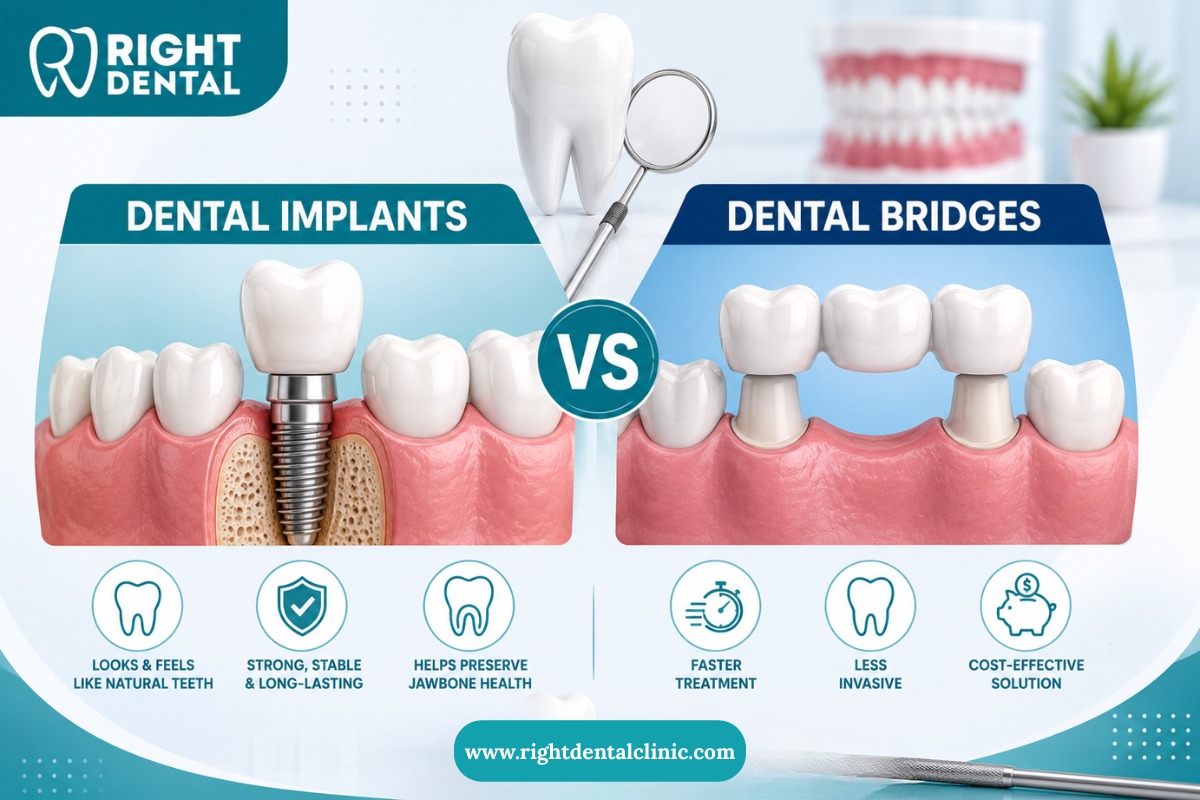
Dental implants are artificial tooth roots made from biocompatible titanium that are surgically placed into the jawbone. Once the implant naturally fuses with the bone, a custom-made dental crown is attached to complete the restoration.
Because implants become part of the jawbone, they look, feel, and function very much like natural teeth.
Benefits of Dental Implants
- Natural-looking appearance
- Strong and stable while chewing
- Long-lasting solution with proper care
- Helps prevent jawbone loss
- Does not affect neighboring healthy teeth
- Easy to maintain with regular brushing and flossing
Dental implants are often considered the most advanced and permanent solution for replacing missing teeth.
What Are Dental Bridges?
A dental bridge is a prosthetic tooth that fills the gap created by one or more missing teeth. The artificial tooth is supported by dental crowns placed on the neighboring healthy teeth.
Dental bridges restore your smile quickly and improve chewing ability without requiring implant surgery.
Benefits of Dental Bridges
- Faster treatment compared to implants
- Restores appearance and function effectively
- Less invasive procedure
- Suitable for patients with insufficient jawbone for implants
- More affordable initial treatment
Dental bridges have been used successfully for many years and remain an excellent treatment option for many patients.
Dental Implants vs Dental Bridges: Key Differences
| Feature | Dental Implants | Dental Bridges |
| Appearance | Looks like a natural tooth | Natural-looking restoration |
| Jawbone Health | Helps preserve jawbone | Does not prevent bone loss |
| Durability | Can last for decades with proper care | Usually lasts 10–15 years |
| Procedure | Minor surgical placement required | Non-surgical restoration |
| Treatment Time | Longer healing period | Faster completion |
| Impact on Nearby Teeth | No effect on adjacent teeth | Requires reshaping neighboring teeth |
| Maintenance | Similar to natural teeth | Requires special cleaning under the bridge |
Which Option Lasts Longer?
One of the biggest advantages of dental implants is their longevity. With proper oral hygiene and regular dental check-ups, implants can last for many years—often decades.
Dental bridges are also durable but may need replacement after several years due to normal wear or changes in the supporting teeth.
Which Treatment Looks More Natural?
Both treatments are designed to blend seamlessly with your existing teeth.
However, because dental implants are anchored directly into the jawbone, they often provide a more natural feel and appearance. They also help maintain facial structure by preventing bone loss.
Cost vs Long-Term Value
Many patients compare treatments based on cost alone.
While dental bridges generally have a lower upfront cost, dental implants often provide greater long-term value because they last longer, require fewer replacements, and help preserve overall oral health.
The best option depends on your dental condition, budget, and long-term goals.
Who Is a Good Candidate for Dental Implants?
You may be a suitable candidate if you have:
- One or more missing teeth
- Healthy gums
- Sufficient jawbone density
- Good overall oral health
- Commitment to maintaining oral hygiene
Your dentist will perform a detailed examination, including digital X-rays, to determine whether implants are right for you.
When Are Dental Bridges Recommended?
Dental bridges may be the better choice if:
- You want a quicker tooth replacement solution.
- Implant surgery is not suitable for your health condition.
- There is insufficient jawbone for implants.
- You’re looking for a cost-effective treatment option.
A qualified dentist will evaluate your oral health and recommend the most appropriate treatment based on your individual needs.
Maintaining Your New Smile
Whether you choose dental implants or dental bridges, maintaining excellent oral hygiene is essential.
Simple habits include:
- Brushing twice a day
- Flossing daily
- Visiting your dentist regularly
- Avoiding excessive sugary foods
- Not using your teeth to open hard objects
Proper care helps extend the lifespan of your dental restoration and keeps your smile healthy.
Final Thoughts
Both dental implants and dental bridges are highly effective solutions for replacing missing teeth. Dental implants offer exceptional durability, preserve jawbone health, and provide a natural look and feel, making them an excellent long-term investment. Dental bridges, on the other hand, are a reliable and faster solution for restoring your smile, especially when implants are not the ideal option.
The best treatment depends on your oral health, lifestyle, and personal preferences. Consulting an experienced dentist will help you choose the solution that best restores your smile, confidence, and quality of life.